(
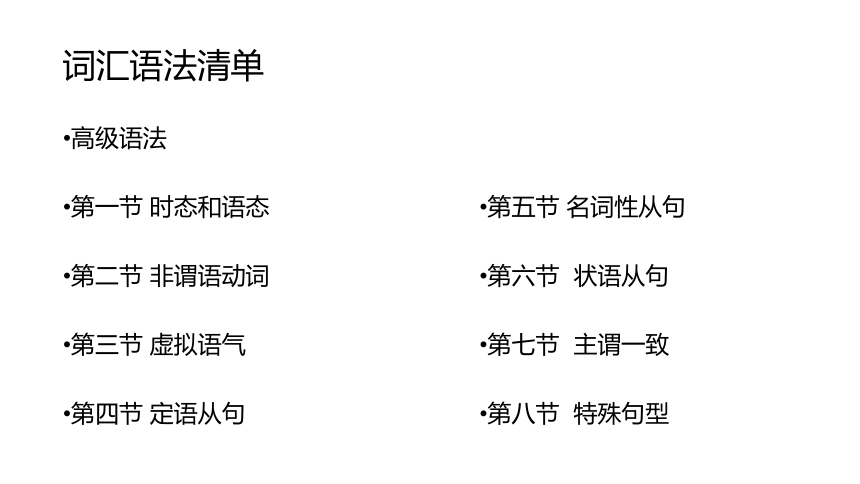
课件网) 词汇语法清单 高级语法 第一节 时态和语态 第二节 非谓语动词 第三节 虚拟语气 第四节 定语从句 第五节 名词性从句 第六节 状语从句 第七节 主谓一致 第八节 特殊句型 时态 1.一般现在时 do/does 2.现在进行时 be(is am are) doing 3.一般过去时 did 4.过去进行时 was/were doing 5.现在完成时 has/have done 时态 6.过去完成时 had done 7.一般将来时 shall/will do 8.过去将来时 should/would do 9.现在完成进行时 has/have been doing 10.过去完成进行时 had been doing 时态 11.将来进行时 shall/will be doing 12.过去将来进行时 should/would be doing 13.将来完成时 shall/will have done 14.过去将来完成时 should/would have done 时态 15.将来完成进行时 shall/will have been doing 16.过去将来完成进行时 should /would have been doing 时态 一般现在时 表示经常性或习惯性的动作 I always travel by underground. 表示现在状况 He is ill now. 表示客观真理 The sun rises in the east and sets in the west. 表示计划或安排将要做的事情 The concert begins at 7 pm. 时间状语标志:always, often. usually, sometimes, every day, now and then=from time to time (1)请写出下列动词的第三人称单数形式 动词原形 get want push go identify talk watch miss mix catch 动词单数 gets wants identifies talks watches misses mixes catches goes pushes (2)请翻译以下句子 ① 我的书都在沙发上。 ②她每周都会和她的朋友们去逛街。 My books are on the sofa. She goes shopping with her friends every week. (3). 用所给动词的正确形式及助动词填空 1. We often _____ (play) in the playground. 2. He ____ (get) up at six o’clock. 3. ___ you (brush) your teeth every morning 4. What he usually (do) after school 5. Danny (study) English, Chinese, Maths, Science and Art at school. 6.She (watch) TV with his parents every evening. play gets brush Do do does studies watches 时态 一般过去时 表示过去某个时间发生动作 She bought her friend a present yesterday. 表示过去一段时间经常性动作 He often played football when he was young. 时间状语标志:a moment ago, three days ago, (the day before) yesterday, the other day, in the past, last night/Friday/week/month/year ①我们上周去了公园,玩得很开心。 ③她三年前放弃了教学。 ⑤我小时候喜欢看漫画书。 We went to the park and had a good time last week . She gave up teaching three years ago. When I was a child, I enjoyed reading comic books. 时态 一般将来时 表示将要发生的动作,will用于各种人称; shall只用于第一人称 I shall/will get better grades next time. Your parents will be glad to hear that you return home. 时间状语标志:soon, next week/month/year, (the day after) tomorrow, in two days/months 时态 一般将来时 "am / is / are going to+动词原形”用来表示事先考虑过的将要发生的动作 Jean is going to meet me at the airport. 时态 一般将来时 ”be doing”表示根据现在计划或安排做某事 常用动词:join, leave, go, come, start, begin, arrive, stay, take I am taking Jane out of dinner tonight. 时态 一般将来时 be+(about) to do, 表示近期内要做的事情 注意:不能与时间状语连用 The new school year is about to start. She is going to see her parents next week. He is going to do the house ... ...