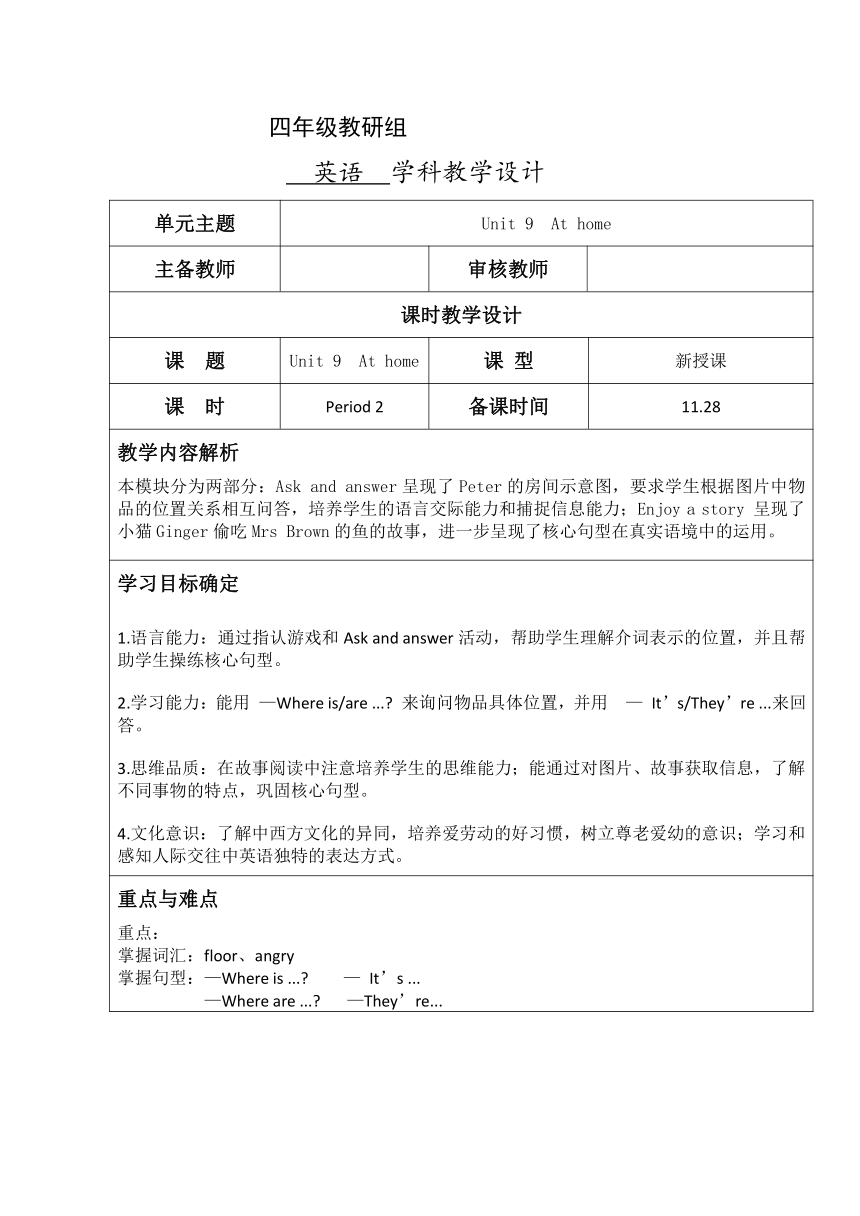
四年级教研组 英语 学科教学设计 单元主题 Unit 9 At home 主备教师 审核教师 课时教学设计 课 题 Unit 9 At home 课 型 新授课 课 时 Period 2 备课时间 11.28 教学内容解析 本模块分为两部分:Ask and answer呈现了Peter的房间示意图,要求学生根据图片中物品的位置关系相互问答,培养学生的语言交际能力和捕捉信息能力;Enjoy a story 呈现了小猫Ginger偷吃Mrs Brown的鱼的故事,进一步呈现了核心句型在真实语境中的运用。 学习目标确定 1.语言能力:通过指认游戏和Ask and answer活动,帮助学生理解介词表示的位置,并且帮助学生操练核心句型。 2.学习能力:能用 —Where is/are ... 来询问物品具体位置,并用 — It’s/They’re ...来回答。 3.思维品质:在故事阅读中注意培养学生的思维能力;能通过对图片、故事获取信息,了解不同事物的特点,巩固核心句型。 4.文化意识:了解中西方文化的异同,培养爱劳动的好习惯,树立尊老爱幼的意识;学习和感知人际交往中英语独特的表达方式。 重点与难点 重点: 掌握词汇:floor、angry 掌握句型:—Where is ... — It’s ... —Where are ... —They’re... 难点:代词it指代前面提到的单数名词和不可数名词,代词they指代复数名词。 课前自主学习指导 通过布置餐桌的活动,让学生进一步运用核心句型来询问和表达物品的位置。 关键问题解决 以教师为主导,以学生为主体是我们一直追求的教学理念。在课堂上,我们应该多运用sing、chant、game、activity等教学,调动学生的学习积极性。让学生动起来,尽可能地参与到课堂中来。 1、 通过Ask and answer这一环节,学生可以分组进行看图片问答、看图说话完成对核心词汇和句型的掌握与运用。 2、带着问题去学习Where is my fish,提高学生对课文的整体了解能力。 学习评价设计 自我评价: 能正确、流利地朗读单词。 能根据问答自己完成画、写、唱等活动。 2、小组互评: 能在小组内熟练地问与答。 积极与组内同学合作,完成组内活动。 学习活动设计 教师活动学生活动三级备课环节一:Pre-task preparationsStep1.Greetings Step2.Warm-up Play the song. 播放歌曲,创设英语氛围 Step3.Look and sayT: Good morning, boys and girls. Ss: Good morning. T: Nice to meet you again. Ss: Nice to meet you too. T: How are you Ss: I’m fine, thank you. And you T: I’m very well. T: How is the weather Ss: It’s... 师生交流,提高口语交际的水平。 Teacher and students sing and act together。 teacher-student interaction can make the Classroom more harmonious。 Where is the egg Where is schoolbag Where is the kite Where is the ball 学生看图回答问题,复习旧知,引出新知。 活动意图说明: 学生可以进行简单的交流,并且可以听懂简单的课堂用语;围绕本单元的主题开展热 身,并且可以熟练的回答所提出的问题。环节二:While-task procedures1.出示Peter的房间图,Ask and answer。 2.Guess 3、Watch and answer a. Where is Mrs Brown b. Is Ginger hungry c. How does Ginger feel at last d. How does Mrs Brown feel 4、Listen and enjoy a story “Where is my fish?”(板书题目) 5、Read and answer 6、Role-playStep1.Look and say 操练句型: —Where is ... — It’s ... —Where are ... —They’re...(板书句型) 学生看图说话或者小组练习,介绍图片上不同物品的位置,让学生熟练掌握重要句型。 Step2.Show a picture and have students guess the protagonist of the story 。Export the text。 Step3.Problem driven, Self-directed learning Now look at the PPT There are four questions ... ...