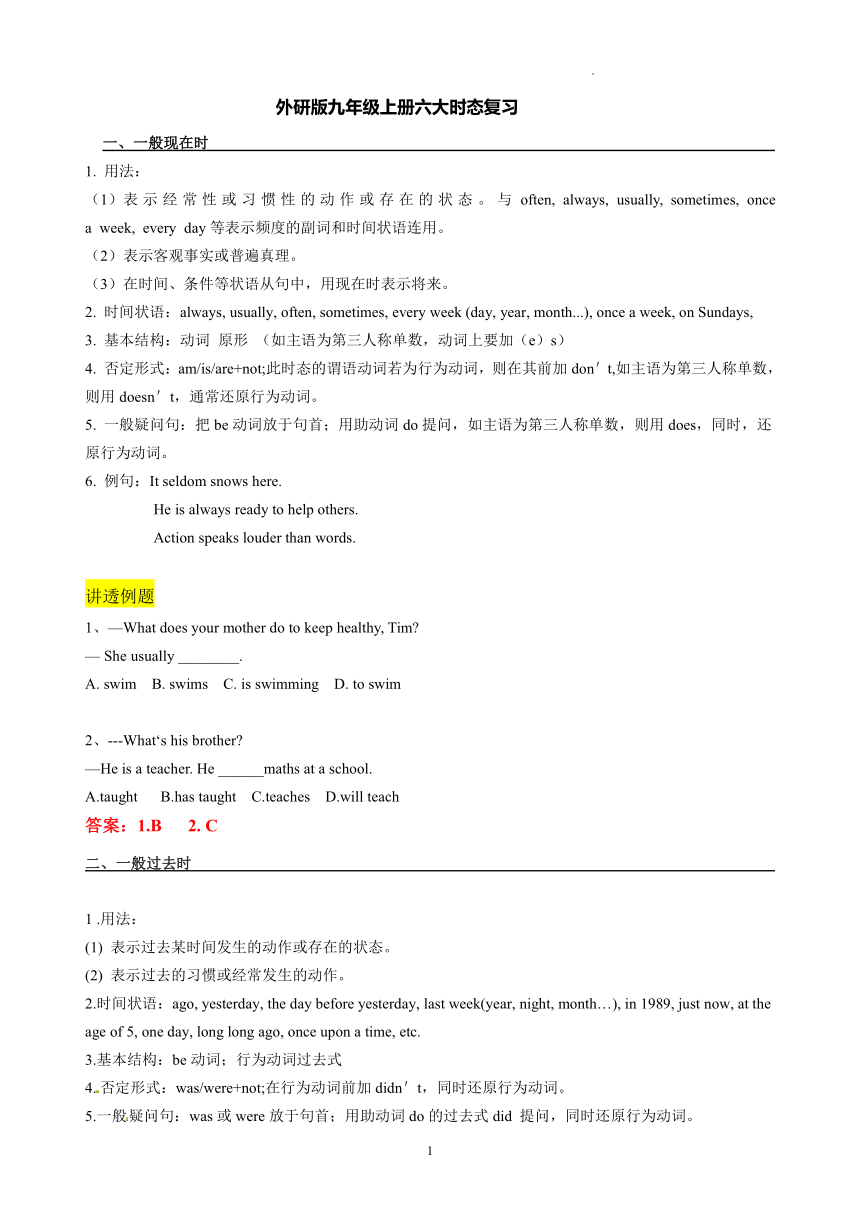
外研版九年级上册六大时态复习 一、一般现在时 1. 用法: 表示经常性或习惯性的动作或存在的状态。与often, always, usually, sometimes, once a week, every day等表示频度的副词和时间状语连用。 (2)表示客观事实或普遍真理。 (3)在时间、条件等状语从句中,用现在时表示将来。 2. 时间状语:always, usually, often, sometimes, every week (day, year, month...), once a week, on Sundays, 3. 基本结构:动词 原形 (如主语为第三人称单数,动词上要加(e)s) 4. 否定形式:am/is/are+not;此时态的谓语动词若为行为动词,则在其前加don't,如主语为第三人称单数,则用doesn't,通常还原行为动词。 5. 一般疑问句:把be动词放于句首;用助动词do提问,如主语为第三人称单数,则用does,同时,还原行为动词。 6. 例句:It seldom snows here. He is always ready to help others. Action speaks louder than words. 讲透例题 1、—What does your mother do to keep healthy, Tim — She usually _____. A. swim B. swims C. is swimming D. to swim 2、--What‘s his brother —He is a teacher. He _____maths at a school. A.taught B.has taught C.teaches D.will teach 答案:1.B 2. C 二、一般过去时 1 .用法: 表示过去某时间发生的动作或存在的状态。 表示过去的习惯或经常发生的动作。 2.时间状语:ago, yesterday, the day before yesterday, last week(year, night, month…), in 1989, just now, at the age of 5, one day, long long ago, once upon a time, etc. 3.基本结构:be动词;行为动词过去式源:] 4.否定形式:was/were+not;在行为动词前加didn't,同时还原行为动词。 5.一般疑问句:was或were放于句首;用助动词do的过去式did 提问,同时还原行为动词。 6.例句:She often came to help us in those days. I didn't know you were so busy. 讲透例题 例1 I don't remember when and where I _____ this umbrella. A.buy B.have bought C.will buy D.bought 例2 -- When _____ you _____ here -- Two days ago. A. did;come B. have; come C. will; come D. do; come 答案:1.D 2. A 三、一般将来时 1. 用法 (1)表示将来发生的动作或存在的状态,其构成是will+动词原形。常与表示将来的时间状语连用。如:tomorrow, next week, in a few days, next Sunday。 be going to +动词原形。表示计划、打算做某事,表示已决定很可能发生的事。 Be doing表示将来 时间状语:tomorrow, soon, next week/ month/ year..., in a week, in 2030, in + 一段时间, one day, in the (near) future, etc 基本结构:(1) will 或 shall + 动词原形 (2) be going to +动词原形 go , come , start, move, sail, leave, arrive ,stay 等可用进行时态表示按计划即将发生的动作。例如: I’m leaving for Beijing. 我要离开北京了。 在时间或条件句中, 用现在时表示将来。例如: When Bill comes (不是will come), ask him to wait for me. 比尔来后,让他等我。 讲透例题 例1ã———Where is your brother —He has gone to Beijing. He back in three days. A. will come B. comes C. has come D. came 例2 If I have enough money, I _____ a school bus to help the poor children go to school. A. buy B. bought C. will buy 答案:1.A 2. C 四、现在进行时 1. 用法: (1)表示此时此刻正在进行的动作。表示现阶段正在进行的动作或持续的状态。 (2)Go,leave,arrive,start等动词的现在进行时表示将来。 2. 时间状语: now, right now, at present, at this time, at the/this moment, these days, look! L ... ...
~~ 您好,已阅读到文档的结尾了 ~~