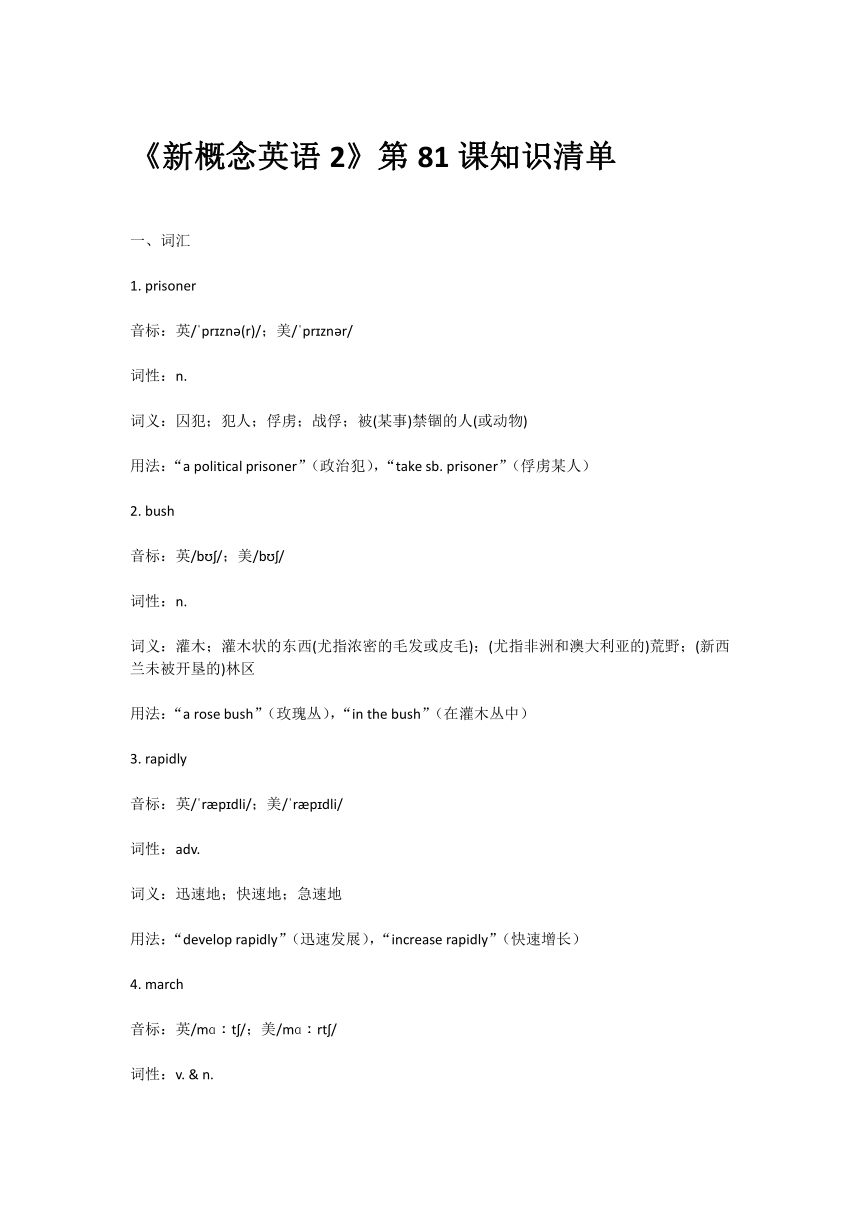
《新概念英语2》第81课知识清单 一、词汇 1. prisoner 音标:英/ pr zn (r)/;美/ pr zn r/ 词性:n. 词义:囚犯;犯人;俘虏;战俘;被(某事)禁锢的人(或动物) 用法:“a political prisoner”(政治犯),“take sb. prisoner”(俘虏某人) 2. bush 音标:英/b /;美/b / 词性:n. 词义:灌木;灌木状的东西(尤指浓密的毛发或皮毛);(尤指非洲和澳大利亚的)荒野;(新西兰未被开垦的)林区 用法:“a rose bush”(玫瑰丛),“in the bush”(在灌木丛中) 3. rapidly 音标:英/ r p dli/;美/ r p dli/ 词性:adv. 词义:迅速地;快速地;急速地 用法:“develop rapidly”(迅速发展),“increase rapidly”(快速增长) 4. march 音标:英/mɑ t /;美/mɑ rt / 词性:v. & n. 词义:v. 齐步走;行进;(坚定地向某地)前进,进发;使同行;强迫(某人)一起走;游行示威;抗议游行;n. 行进;行军;示威游行;抗议游行;进行曲;稳步发展;稳步前进;三月 用法:作动词,“march along”(沿着……行进);作名词,“a military march”(军队进行曲),“in March”(在三月) 5. boldly 音标:英/ b ldli/;美/ bo ldli/ 词性:adv. 词义:大胆地;冒失地;显眼地;醒目地 用法:“speak boldly”(大胆地说),“walk boldly”(大胆地走) 二、重点句型 1. When he had killed the guard, the prisoner of war quickly dragged him into the bushes. 语法点:过去完成时,“had killed”表示在过去某个动作“dragged”之前已经完成的动作 ,一般过去时,“dragged”描述过去发生的动作 ,“when”引导时间状语从句 。 例句:When she had finished her homework, she went out to play with her friends.(她完成作业后,就出去和朋友们玩了。) 2. He then changed into the dead man's clothes and marched boldly up and down in front of the camp. 语法点:一般过去时,“changed”“marched”描述过去发生的动作 ,“change into”表示“换上” ,“up and down”表示“来来回回” 。 例句:He then put on his new shoes and walked happily around the room.(然后他穿上新鞋,高兴地在房间里走来走去。) 3. He could hear shouting in the camp itself. Lying in the bushes, he could not help thinking of the scene of the battle. 语法点:一般过去时,“could hear”“could not help thinking”描述过去发生的动作和状态 ,“lying in the bushes”是现在分词短语作伴随状语 ,“could not help doing sth.”表示“忍不住做某事” 。 例句:She could see the stars in the sky. Standing on the balcony, she could not help thinking of her hometown.(她能看到天空中的星星。站在阳台上,她不禁想起了家乡。) 三、语法聚焦 1. 过去完成时 构成:主语+had+过去分词 。 用法:表示在过去某个动作或时间之前已经发生或完成的动作 ,即“过去的过去” 。常与“by + 过去时间”“before + 过去时间”“when + 一般过去时从句”等连用 。如“By the end of last month, they had finished the project.”(到上个月底,他们已经完成了这个项目) 。 2. 一般过去时 构成: 肯定句:主语+动词过去式。规则动词过去式一般加 -ed,如“drag - dragged”;不规则动词需特殊记忆,如“go - went”“come - came” 。 否定句:主语+didn't + 动词原形。如“He didn't go to school yesterday.”(他昨天没去上学) 。 一般疑问句:Did + 主语 + 动词原形+其他?肯定回答:Yes, 主语 + did. 否定回答:No, 主语 + didn't. 如“Did you see the movie last night ”(你昨晚看电影了吗?) 用法:表示过去某个特 ... ...
~~ 您好,已阅读到文档的结尾了 ~~